

Inside The Divisive Fight Over How A Top Progressive Think Tank Handled Sexual Harassment
BUY quality bulk Yahoo Twitter Hotmail Google Voice Facebook Accounts
sexyangel1583 28yo Worcester, Massachusetts, United States


One of Washington's leading liberal institutions grappled with a divisive internal battle over sexual harassment during and in the aftermath of the 2016 election, according to documents obtained by BuzzFeed News and interviews with 19 current and former staffers.
The Center for American Progress, the politics and policy hub for the Democratic establishment, has put out four different policy proposal papers on handling sexual harassment in the workplace, as well as data on how pervasive the issue is “across all industries.”
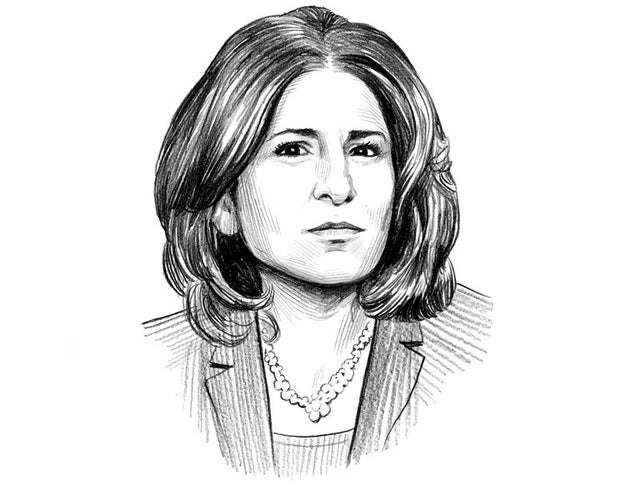
Neera Tanden
Joe McKendry for BuzzFeed News
The organization’s president, Neera Tanden, has vehemently criticized Republicans for their reaction to the accusations of sexual misconduct against President Donald Trump and wrote in a tweet still pinned to her profile, “I don't think the country has understood how psychologically wounding it was to so many women that Trump won after the Access Hollywood tape.”
But only an hour after the Access Hollywood tape was made public, top officials at CAP received an exit memo from a young woman who'd just quit detailing the sexual harassment she experienced from Benton Strong, a manager on her team — harassment, she wrote, that management already knew about — and how she faced retaliation for reporting it.
“I surely expected better out of an organization that housed a national campaign on sexual assault.”
In the email, the junior staffer, who asked that BuzzFeed News refer her to as Mary, which is part of the woman’s formal name, wrote that “on several occasions, myself and others on the team felt as if reporting had been a mistake and that the retaliation, worsening of already tenuous team dynamics, and treatment by supervisors outweighed the seemingly positive act of reporting sexual harassment in the workplace.” When contacted about this story, the woman confirmed the authenticity of the exit memo, but declined to comment further, except to respond on Saturday to a statement from CAP.
“CAP’s culture obscures its mission,” Mary wrote, toward the end of her memo. “All of this to say, I surely expected better out of an organization that housed a national campaign on sexual assault.”
For young Democrats in particular, the Center for American Progress is a training ground, a place to work in progressive politics and policy for a few years under some of the most well-known and well-connected operatives in Washington. “These are important relationships,” as one former staffer described it. “You go along and you get along and they help you get a new job later.”
Documents obtained by BuzzFeed News and interviews with 19 current and former staffers describe a chaotic internal culture in which, according to a July 2016 memo written by CAP’s employee union, there were “several incidents of sexual harassment against several members of our unit.” The documents and interviews pull back the curtain on a culture in which young staffers felt there was a gap between the organization’s mission and its everyday realities.
The memo — which union leaders never delivered to Tanden, but used as talking points in a meeting with her — laid out what members saw as CAP’s failures, both broadly and in the specific case of Strong, who had recently left the organization:
“Management failed to promptly take sufficient tangible employment action against the said employee for sexual harassment, thereby allowing the said employee’s behavior to escalate.
“Management has failed to present measures to correct the effects of the said employee’s sexual harassment, thereby perpetuating a hostile work environment.
“Management has failed to create a safe space upon which members of our unit — including those subjected to the said employee’s unlawful harassment — feel comfortable enough to report incidents of sexual harassment, among other forms of discrimination, without fear of retaliation or further harassment.
“Management has failed to take reasonable steps to prevent incidents of sexual harassment from occurring in the workplace.
“Management has failed to adequately inform employees of what constitutes unlawful harassment in the workplace, how to report such incidents, and what kind of recourse is available under such circumstances.”
The union wrote in its memo that while CAP “eventually took appropriate course of action,” management “failed to adequately address the situation.” And interviews with staffers suggest that the process at the time was messy.
According to the document, one proposal the union offered was that CAP hold a sexual harassment response training “in the immediate future” as well as periodically going forward. The union also wanted CAP to outline to staff how to report issues of harassment.
The union wrote in its memo that while CAP “eventually took appropriate course of action,” management “failed to adequately address the situation.”
Tanden refused, one former union member with intimate knowledge of the discussion told BuzzFeed News. “Neera’s approach was maybe we can start hosting brown bags with HR so people will feel more comfortable coming out and doing things. So they had almost a do-nothing approach. ... They said they would think about things that [the union brought up], and that was essentially it,” the former union member said.
In a statement to BuzzFeed News, CAP said that it did not receive the memo at the time or since, and that “most of the allegations” laid out in the memo “were not stated” during the actual meeting.
“They raised the need for CAP to be a safe space; we specifically asked them if they had heard of any other case of harassment or improper conduct. Other than what had been reported to us, they could not provide any,” CAP said in the statement, noting that Strong only had two reports made against him during his time with the organization, and that the union had not spoken with Mary. CAP said the union would have “no way of knowing that” Strong was disciplined after the first report.
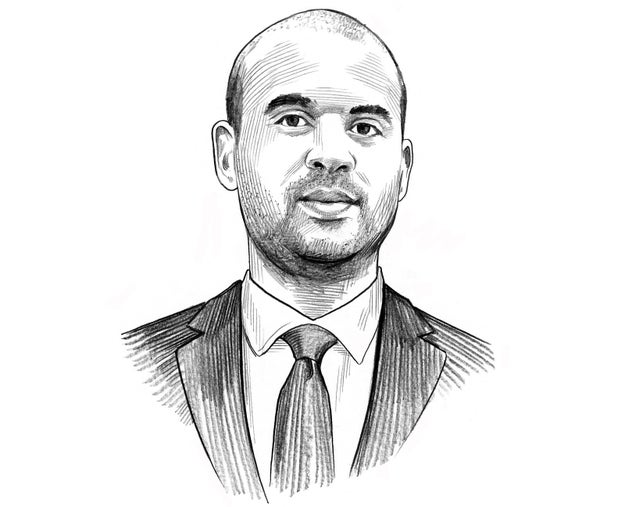
Benton Strong
Joe McKendry for BuzzFeed News
CAP said that Tanden never refused to hold sexual harassment trainings, and that she had asked for union recommendations on improving trainings, but confirmed that she suggested hosting brown bags with HR in the context of the “need to ensure work was a safe space for CAP employees.” The organization pointed to a mandatory “inclusion” training it held in June 2016, which “included discussion of harassment,” while acknowledging that CAP received complaints that the training “was not sophisticated enough for our audience.”
Additionally, CAP said that it was “legally prohibited from making any unilateral changes to CAP policy” — including holding a new sexual harassment training or changing the organization’s sexual harassment policy — because of ongoing contract negotiations with the union. Two former union members noted that CAP could have engaged in a memorandum of agreement with the union to make changes to its sexual harassment policy or to add trainings, as it did when altering CAP’s overtime pay policy in January 2017.
CAP said in a statement that the union did not ask for a side agreement of that nature, so it did not pursue one. “If the union had asked us to negotiate a freestanding side agreement, as they did in the case of overtime policies, we would have done so,” the organization said.
“Our goal was to take steps that would address any concerns from the union,” CAP said, “but also respect the complainant’s request that we respect her privacy and not let details of the complaint get out.”
Not one of the 19 current and former employees interviewed for this story said they underwent workplace training about sexual harassment during their time at the organization. Five staffers mentioned the 2016 inclusion training, but said that it was focused on diversity and that discussion of sexual harassment was minimal.
CAP’s handling of the allegations against Strong came as a profound disappointment to the young progressive women who joined the organization, many of whom saw their jobs as an entree to what they expected would be the Clinton White House.
In the first months of 2018, nearly two years after CAP’s employee union asked the organization to implement sexual harassment trainings, CAP released a new sexual harassment policy. Asked about this, CAP pointed to the collective bargaining process and said that CAP had asked the union to present “any proposed changes” to the policy. The union, which is under new management, said in a statement to BuzzFeed News that it “delivered a complete and entirely revamped sexual harassment policy following management’s solicitation for input” in late 2017 and that the new policy included “many of the Union’s recommendations.”
“The Union believes that this new policy, combined with what the Union hopes to be a robust rollout that includes future compliance trainings and efforts to educate staff about their rights under the policy, has the potential for marked improvements,” union leadership said in the statement. “However, if the Union does not feel that CAP is living up to its progressive values on this or other workplace issues, it has not and will not hesitate to make management aware and advocate for positive change.”
A man walks into the Center for American Progress, Wednesday, Feb. 21, 2018, at its office in Washington, DC.
Jacquelyn Martin / AP
Founded by former Clinton campaign chair John Podesta in 2003, the Center for American Progress houses two groups, both of which work out of an office not far from the White House.
CAP, the main organization, focuses on policy; its campaign arm, the Center for American Progress Action Fund (CAP Action), works on advocacy. Tanden currently serves as the president and CEO of the sister organizations, which together employ more than 330 people. (CAP Action also controls ThinkProgress, an online progressive news organization fairly walled off from the main organization and maintains editorial independence.)
CAP Action hired Strong in May 2014 as an associate director for communications, in what they call the “War Room,” a communications and advocacy shop that ultimately focused on the 2016 election during his time at the organization. Strong, a Seattle native, had run communications for the Washington State Democratic Party and the Climate Action Campaign, a grassroots group based in San Diego, before taking the job.
Two women filed complaints about Strong in 2016 — the first reported in May that Strong had asked several women on the team if they had been flashed or masturbated in front of and then mocked a woman in a team meeting for saying she had cried when it happened to her, and the second, Mary, reported that he had sent her a series of unwanted, sexually explicit text messages — according to interviews with current and former employees, as well as documents obtained by BuzzFeed News, including his personnel file.
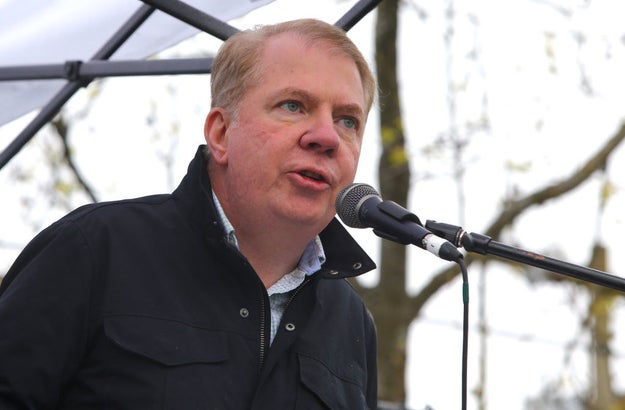
Former Seattle mayor Ed Murray speaks at a rally during the March for Science on April 22, 2017, in Seattle.
Karen Ducey / Getty Images
Shortly after the first woman — like Mary, a junior staffer in the War Room — reported Strong to HR in May 2016, Strong accepted a job with then–Seattle mayor Ed Murray, which was set to start on Aug. 1. In the weeks leading up to his departure from CAP, Strong also began sending sexual text messages to Mary, according to nine former staffers who viewed the messages or saw screenshots of them.
In her exit memo, Mary described receiving “lewd and inappropriate text messages” from Strong that caused her to feel “uncomfortable being in the workplace around him.”
Five former staffers told BuzzFeed News that they saw screenshots of a text in which Strong, a manager on Mary’s team (though not her direct supervisor), messaged Mary late at night saying that he wanted to perform oral sex on her. In other texts, Strong told Mary that he was discussing with several other male CAP staffers whether white women or black women were better at giving blow jobs; he repeatedly asked her to come over to his apartment or let him come over to hers for a drink; and he frequently made comments about her body. These messages were often interspersed with Strong asking Mary if he had crossed a “line” she had apparently drawn.
A friend of Mary’s, another former CAP employee who viewed the texts, said, “It was, like, incessant. ... It was like strings and strings of texts and her just being like, ‘no no no.’”
In July 2016, after a work meeting and happy hour were held in Strong’s apartment building, Mary filed a complaint with CAP’s HR department. CAP said in a statement that this meeting was not mandatory and was in a “public common room at his apartment complex,” not Strong’s apartment itself.
In its statement, CAP said that after the report of “inappropriate text messages,” the HR department “immediately began an investigation of the incident, under the supervision of CAP’s general counsel and in consultation with outside employment law counsel. On the basis of our preliminary investigation, conducted over the course of a few hours that same day we received the report, we found that Mr. Strong had acted inappropriately, and told him not to return to the office, and not to retaliate against, or even contact, the complainant. He was escorted from the building that afternoon and never returned.”
She described retaliation she faced in the aftermath — including being asked whether she was “worth spending time or money on.”
more on Geo altCombayoucowgirl 23yo Lacassine, Louisiana, United States


TexasHW819 27yo Houston, Texas, United States


Комментариев нет:
Отправить комментарий